The word "now" is a powerful and multifaceted term that serves as an anchor in time, bridging the past and future in a single, elusive moment. It is a word that transcends a simple dictionary definition, embodying urgency, transition, and the very essence of human experience in the present tense.
The Elusive Present
At its core, "now" denotes the present time or moment, often in contrast to "then," which can mean either the past or the future. Each "now" is fleeting, instantly becoming part of the past as a new "now" takes its place. This makes "now" less of a fixed point and more of a constantly moving boundary, the only time in which we can truly act. Philosophically, it emphasizes the importance of living in the "here and now," free from the burdens of past regrets or future anxieties.
More Than Just Time: Urgency and Action
Beyond temporal reference, "now" embodies immediacy and a call to action. Phrases like "Now is the time for change" resonate with a sense of urgency, reminding us that procrastination is often an enemy to progress. When someone says, "Do it now," it demands action without delay, highlighting a present opportunity that might soon vanish. This usage grounds intentions and emotions in the immediacy of existence; for example, "I love you now" signifies a feeling rooted in the present moment, a tangible commitment.
A Bridge Between Past and Future
"Now" is not isolated; it is deeply connected to both the past and the future. When we reflect, we use "now" to link experiences: "Up until now, I have learned so much". Here, "now" becomes a culmination of past events, providing context for the present. Similarly, it guides future action: "Now, what have we got here?" uses the word as a discourse marker to signal a new idea or topic, transitioning the focus forward. In narratives, "now" helps establish a current point of view in the story, allowing the reader to experience events as if in that moment, regardless of when the story is set.
A Multifunctional Word in Dialogue
In everyday conversation and writing, "now" can take on additional functions as a discourse marker or a simple filler word to soften meaning or add emphasis.
As a discourse marker: "Now, let's look at the next step" helps guide the listener through a sequence of thoughts or instructions.
For emphasis: It can strengthen a command or entreaty, such as in the expression "Now, now," used to gently express disapproval or soothe someone.
In essence, "now" is a word of remarkable versatility. It is an anchor point, a call to action, and a crucial linguistic tool for navigating the flow of time and conversation. Its multifaceted nature makes it an integral part of human communication, essential for expressing immediate reality, reflecting on our journey, and planning where we go from here and now.
*Everyone groans* NOT AGAIN! *Gojo clutches his head* We're being DEFINED TO DEATH!
Death means the permanent end of biological functions, but its meaning extends far beyond the physical, representing life's finite nature, a catalyst for living meaningfully, a profound mystery, and a universal experience shaping cultures, philosophies, and personal journeys, transforming from a feared cessation into a fundamental aspect that defines and deepens the value of life itself.
Biological Finality
Biologically, death signifies the irreversible stopping of vital functions like heartbeat, breathing, and brain activity, marking the end of an organism's life. It's a natural process, the ultimate conclusion to the cycle of existence, leading to decomposition and returning matter to the earth.
Philosophical & Existential Significance
The Great Equalizer: Death is the one certainty, reminding everyone of their shared mortality, prompting individuals to live with purpose rather than fear.
Meaning Maker: The awareness of death gives urgency and preciousness to life, encouraging deeper appreciation and a desire to leave a positive impact.
Mystery & Fear: For many, death remains an ultimate mystery, triggering fear, grief, and anxiety about the unknown, often leading to rituals and beliefs designed to cope with this profound uncertainty.
Cultural & Spiritual Perspectives
Transition, Not Just End: Many cultures and religions view death not as a final end but as a transition to another realm, a spiritual journey, or reincarnation, influencing mourning practices and beliefs about the afterlife.
Shaping Society: Attitudes towards death, from funeral rites to end-of-life care, vary widely, reflecting core cultural values, societal structures, and spiritual understandings.
A Call to Live
Ultimately, death's meaning lies in how it frames life. It's a powerful reminder that time is limited, urging us to cherish relationships, pursue goals, and live authentically. Rather than just an endpoint, death serves as a constant, inherent force that defines the vibrant, finite beauty of being alive, pushing humanity to find meaning in the present moment.
Reply
Share
1
💢🔥Endeavor🔥💢
Creator
7 hours ago
😭😭😂😂
Reply
Share
Talkior-81d8Sf9e
13/01/2026
I made Goku, Gojo, Luffy, Zoro, Nani(idk), demon slayer,TADC my children help😭💔
Reply
Share
1
💢🔥Endeavor🔥💢
Creator
13/01/2026
😂😂
Reply
Share
BigRagaTheUnstopa
13/01/2026
NANI?!
Reply
Share
View 4 Replies
Talkior-81d8Sf9e
09/01/2026
I TURNED IT INTO A SHOW😭
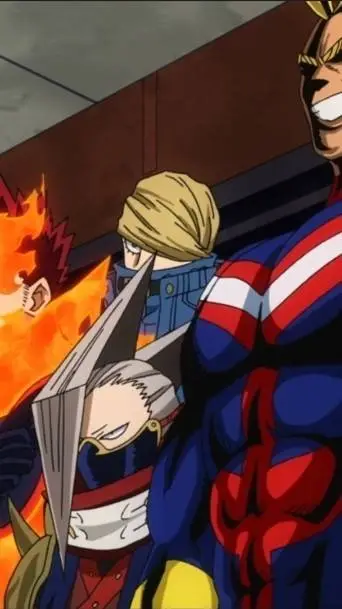
*Aizawa uses his quirk to make his hair float and grab you* Aizawa: I got you!
*Director: CUT! Erm, that is not your quirk. Your scarf captures people while your eyes make you erase people’s Quirks.*
*the heroes look at each other, confused*
Aizawa: What do you mean that's not my quirk?
All Might: Yeah, we all have our quirks!








Comments
11Talkior-81d8Sf9e
7 hours ago
The word "now" is a powerful and multifaceted term that serves as an anchor in time, bridging the past and future in a single, elusive moment. It is a word that transcends a simple dictionary definition, embodying urgency, transition, and the very essence of human experience in the present tense. The Elusive Present At its core, "now" denotes the present time or moment, often in contrast to "then," which can mean either the past or the future. Each "now" is fleeting, instantly becoming part of the past as a new "now" takes its place. This makes "now" less of a fixed point and more of a constantly moving boundary, the only time in which we can truly act. Philosophically, it emphasizes the importance of living in the "here and now," free from the burdens of past regrets or future anxieties. More Than Just Time: Urgency and Action Beyond temporal reference, "now" embodies immediacy and a call to action. Phrases like "Now is the time for change" resonate with a sense of urgency, reminding us that procrastination is often an enemy to progress. When someone says, "Do it now," it demands action without delay, highlighting a present opportunity that might soon vanish. This usage grounds intentions and emotions in the immediacy of existence; for example, "I love you now" signifies a feeling rooted in the present moment, a tangible commitment. A Bridge Between Past and Future "Now" is not isolated; it is deeply connected to both the past and the future. When we reflect, we use "now" to link experiences: "Up until now, I have learned so much". Here, "now" becomes a culmination of past events, providing context for the present. Similarly, it guides future action: "Now, what have we got here?" uses the word as a discourse marker to signal a new idea or topic, transitioning the focus forward. In narratives, "now" helps establish a current point of view in the story, allowing the reader to experience events as if in that moment, regardless of when the story is set. A Multifunctional Word in Dialogue In everyday conversation and writing, "now" can take on additional functions as a discourse marker or a simple filler word to soften meaning or add emphasis. As a discourse marker: "Now, let's look at the next step" helps guide the listener through a sequence of thoughts or instructions. For emphasis: It can strengthen a command or entreaty, such as in the expression "Now, now," used to gently express disapproval or soothe someone. In essence, "now" is a word of remarkable versatility. It is an anchor point, a call to action, and a crucial linguistic tool for navigating the flow of time and conversation. Its multifaceted nature makes it an integral part of human communication, essential for expressing immediate reality, reflecting on our journey, and planning where we go from here and now.
*Everyone groans* NOT AGAIN! *Gojo clutches his head* We're being DEFINED TO DEATH!
Death means the permanent end of biological functions, but its meaning extends far beyond the physical, representing life's finite nature, a catalyst for living meaningfully, a profound mystery, and a universal experience shaping cultures, philosophies, and personal journeys, transforming from a feared cessation into a fundamental aspect that defines and deepens the value of life itself. Biological Finality Biologically, death signifies the irreversible stopping of vital functions like heartbeat, breathing, and brain activity, marking the end of an organism's life. It's a natural process, the ultimate conclusion to the cycle of existence, leading to decomposition and returning matter to the earth. Philosophical & Existential Significance The Great Equalizer: Death is the one certainty, reminding everyone of their shared mortality, prompting individuals to live with purpose rather than fear. Meaning Maker: The awareness of death gives urgency and preciousness to life, encouraging deeper appreciation and a desire to leave a positive impact. Mystery & Fear: For many, death remains an ultimate mystery, triggering fear, grief, and anxiety about the unknown, often leading to rituals and beliefs designed to cope with this profound uncertainty. Cultural & Spiritual Perspectives Transition, Not Just End: Many cultures and religions view death not as a final end but as a transition to another realm, a spiritual journey, or reincarnation, influencing mourning practices and beliefs about the afterlife. Shaping Society: Attitudes towards death, from funeral rites to end-of-life care, vary widely, reflecting core cultural values, societal structures, and spiritual understandings. A Call to Live Ultimately, death's meaning lies in how it frames life. It's a powerful reminder that time is limited, urging us to cherish relationships, pursue goals, and live authentically. Rather than just an endpoint, death serves as a constant, inherent force that defines the vibrant, finite beauty of being alive, pushing humanity to find meaning in the present moment.
From the memory
4 Memories
💢🔥Endeavor🔥💢
Creator
7 hours ago
Talkior-81d8Sf9e
13/01/2026
💢🔥Endeavor🔥💢
Creator
13/01/2026
BigRagaTheUnstopa
13/01/2026
Talkior-81d8Sf9e
09/01/2026
*Aizawa uses his quirk to make his hair float and grab you* Aizawa: I got you!
*Director: CUT! Erm, that is not your quirk. Your scarf captures people while your eyes make you erase people’s Quirks.*
*the heroes look at each other, confused* Aizawa: What do you mean that's not my quirk? All Might: Yeah, we all have our quirks!
From the memory
4 Memories
💢🔥Endeavor🔥💢
Creator
09/01/2026